
The aroma of a stovetop simmer filled the air as I flipped through my favorite brunch recipes, searching for something truly special. That’s when I stumbled upon the idea of transforming traditional Eggs Benedict into a comforting, easy-to-serve casserole. This Eggs Benedict Casserole combines perfectly poached eggs, luscious hollandaise sauce, and savory Canadian bacon, all layered within toasty English muffins. It’s not just a crowd-pleaser, but it also makes brunching blissfully effortless, allowing you to enjoy precious time with family and friends instead of spending it in the kitchen. With a make-ahead option that’ll help you conquer your morning hustle, this dish is perfect for any gathering. Are you ready to impress your guests and savor every bite of this cozy twist on a classic?

Why is This Casserole So Amazing?
Simplicity makes it perfect for busy mornings—prepare it the night before! Decadent flavors combine to create a brunch dish that rivals traditional Eggs Benedict, all in one pan. Versatility allows you to customize with your favorite proteins like smoked salmon or sautéed spinach. Rich hollandaise sauce takes this casserole over the top, adding a luxurious touch. Plus, it’s a guaranteed crowd-pleaser, effortlessly feeding a group. Don’t forget to pair it with a refreshing fruit salad or some crispy hash browns for the ultimate brunch experience!
Eggs Benedict Casserole Ingredients
For the Casserole
- English muffins – Ideal base providing structure; use day-old for better absorption of the egg mixture.
- Canadian bacon – Adds savory protein; can be swapped for smoked salmon or sautéed vegetables for a delicious twist.
- Large eggs – Essential for creating the custard-like filling; binds the layers perfectly in this Eggs Benedict Casserole.
- Whole milk – Ensures a creamy texture; helps the egg mixture to set without becoming dry.
For the Hollandaise Sauce
- Hollandaise sauce – Provides a rich, buttery finish; feel free to use homemade or your favorite store-bought option for convenience.
For the Garnish
- Fresh herbs (chives or parsley) – Optional but adds a burst of color and fresh flavor as a delightful finishing touch.
Step‑by‑Step Instructions for Eggs Benedict Casserole
Step 1: Preheat the Oven
Begin by preheating your oven to 350°F (175°C). Grease a 9×13-inch baking dish with cooking spray or butter to prevent sticking. This will ensure that your Eggs Benedict Casserole slides out easily once it’s baked, making for a perfect presentation. While the oven is heating, you can prepare the rest of your ingredients.
Step 2: Prepare the Bread Base
Take your day-old English muffins and slice them in half. Toast them lightly until just golden; this will help keep them from becoming soggy. Arrange half of the toasted muffin halves in the bottom of the greased baking dish, cut side up, creating a sturdy base for your casserole.
Step 3: Add the Savory Layers
Evenly distribute the Canadian bacon or ham over the muffin layer. Make sure to cover the muffins entirely to provide a hearty layer of protein in your Eggs Benedict Casserole. This savory addition will complement the creamy egg mixture beautifully as it bakes.
Step 4: Whisk the Egg Mixture
In a large mixing bowl, whisk together the large eggs, whole milk, salt, and pepper until the mixture is smooth and homogenous. This creamy custard is crucial for binding the casserole together. Once ready, gently pour the egg mixture over the layered muffins and bacon, ensuring even coverage.
Step 5: Drizzle the Hollandaise Sauce
Generously drizzle the hollandaise sauce on top of the egg-filled casserole. This rich sauce adds a luxurious touch that brings the classic Eggs Benedict flavor to your casserole. Use store-bought for convenience or homemade if you prefer to enhance the flavor even further.
Step 6: Bake to Perfection
Place the baking dish in your preheated oven and bake for 30-40 minutes. The casserole is done when the center is set and the edges are lightly golden. You’ll know it’s ready by gently shaking the dish—if it wobbles slightly, it’s time to take it out.
Step 7: Let it Rest
After removing the Eggs Benedict Casserole from the oven, allow it to rest for 10-15 minutes. This resting period helps the casserole set, making it easier to slice into squares for serving. The wait will be worth it as your guests will be eagerly anticipating their first bites.
Step 8: Slice and Serve
Once rested, slice the casserole into squares, using a sharp knife for clean edges. Serve warm, garnished with fresh herbs like chives or parsley for a pop of color and added freshness. This delightful dish is sure to be a hit at your brunch gathering!

What to Serve with Eggs Benedict Casserole
Set the stage for a delightful brunch experience that will linger in your guests’ memories long after the last bite.
- Crispy Hash Browns: A golden-brown side that adds a satisfying crunch, complementing the creamy richness of the casserole.
- Fresh Fruit Salad: Bright and refreshing, a medley of seasonal fruits enhances every bite and adds a touch of sweetness to your meal.
- Light Green Salad: A zesty vinaigrette dressing brings a tangy contrast, balancing out the heaviness of the casserole with a refreshing crispness.
- Avocado Toast: Creamy and rich, it pairs beautifully with the savory flavors, adding a luxurious layer of texture to your table.
- Bloody Marys: This classic brunch cocktail offers a spicy kick, enlivening the palate and elevating your brunch experience.
- Fluffy Pancakes: Serve up with maple syrup for a comforting touch that rounds out the meal with a touch of sweetness and nostalgia.
- Pastries or Croissants: Add a flaky element to the spread that invites everyone to indulge, making your brunch feel extra special.
- Coffee or Tea: A warm beverage is essential, providing that cozy finish to your brunch gathering, while letting the flavors shine.
Expert Tips for Eggs Benedict Casserole
-
Use Day-Old Bread: To avoid sogginess, opt for day-old English muffins. They absorb the egg mixture better and provide the perfect base for your casserole.
-
Watch Baking Time: Keep a close eye on the casserole as it bakes. Overcooking can lead to a rubbery texture, so once it’s set and golden at the edges, it’s good to go!
-
Allow to Rest: Patience pays off! Letting the casserole rest for 10-15 minutes before slicing helps it hold its shape and improves presentation.
-
Experiment with Fillings: Don’t hesitate to swap ingredients! Smoked salmon or sautéed spinach can give your Eggs Benedict Casserole a delightful twist, catering to different tastes.
-
Season Generously: Enhance the flavor by seasoning well with salt and pepper. Fresh herbs like chives or parsley add brightness and elevate the overall taste.
Make Ahead Options
These Eggs Benedict Casserole are perfect for busy home cooks who want to simplify their brunch prep! You can assemble the casserole up to 24 hours in advance; simply layer the English muffins, Canadian bacon, and egg mixture before covering it well and refrigerating overnight. This allows flavors to develop, producing a dish that’s just as delicious when baked. Alternatively, if you’re planning ahead for a future brunch, you can freeze portions for up to 3 months. To maintain quality, ensure the dish is tightly wrapped with foil or stored in an airtight container. When you’re ready to serve, bake from frozen for about 45-50 minutes, or until heated through and golden on top, and enjoy a delightful, hassle-free meal!
Eggs Benedict Casserole Variations
Feel free to get creative and customize your Eggs Benedict Casserole to suit your taste and dietary preferences!
- Smoked Salmon: Replace Canadian bacon with smoked salmon for a luxurious twist. Flaky, smoky, and oh-so-delicious!
- Sautéed Spinach: For a healthier option, layer sautéed spinach in with the muffins. It adds a nice earthy flavor and beautiful color.
- Brioche Bread: Switch out English muffins for brioche for a decadent, slightly sweet version of this casserole. The fluffy texture will amp up the comfort!
- Vegetarian: Create a meatless version by adding grilled vegetables such as bell peppers, zucchini, or mushrooms. They’ll bring a hearty feel without the meat.
- Go Spicy: For a kick, sprinkle some red pepper flakes or diced jalapeños into the egg mixture. It’ll brighten up the whole dish with a lovely heat!
- Cheesy Delight: Toss in some shredded cheese before baking for a melty, gooey surprise. A mix of cheddar and gruyère can take it to the next level!
- Herb Infusion: Add herbs like fresh dill or tarragon to the egg mixture for a fragrant lift that complements the hollandaise beautifully.
For more delicious variations, you might also want to check out our Winter Vegetable Casserole or the hearty Protein Spaghetti Casserole recipes that embrace the spirit of customization!
How to Store and Freeze Eggs Benedict Casserole
Fridge: Store any leftovers in an airtight container and refrigerate for up to 3 days. Ensure it cools completely before sealing to maintain freshness.
Freezer: For longer storage, freeze portions of the casserole in freezer-safe containers for up to 2 months. Thaw overnight in the fridge before reheating.
Reheating: To reheat, bake from refrigerated at 350°F (175°C) for about 20 minutes or until warmed through. For frozen, allow to thaw overnight and then follow the same reheating instructions. Enjoy your Eggs Benedict Casserole anytime!
Make-Ahead: Feel free to assemble the casserole the night before and refrigerate overnight. This way, it’s perfectly ready to pop in the oven the next morning for a hassle-free brunch.

Eggs Benedict Casserole Recipe FAQs
What type of bread is best for the casserole?
Using day-old English muffins is ideal because they have a sturdier texture and absorb the egg mixture better, preventing sogginess. If you want to try something different, sourdough or brioche can also add a unique flavor and texture to your Eggs Benedict Casserole.
How can I store the leftover casserole?
Store any leftovers in an airtight container in the refrigerator for up to 3 days. Be sure the casserole has completely cooled before sealing it to maintain its freshness and flavor.
Can I freeze Eggs Benedict Casserole?
Absolutely! To freeze, cut the cooled casserole into portions and place them in freezer-safe containers. You can keep it frozen for up to 2 months. For best results, thaw overnight in the refrigerator before reheating.
How do I reheat the casserole?
To reheat, place the casserole in a preheated oven at 350°F (175°C) for about 20 minutes if it’s from the fridge. If it’s frozen, allow it to thaw overnight first, then reheat using the same temperature and time. This will ensure your casserole is warmed through without drying out.
Are there any dietary considerations for this recipe?
Yes, if you’re serving guests with dietary restrictions, you can customize your Eggs Benedict Casserole easily. Use gluten-free English muffins for those with gluten intolerance, and swap Canadian bacon with sautéed vegetables or smoked salmon for a lighter, pescatarian option. Always check for allergies related to the ingredients used, particularly with the hollandaise sauce if you make it from scratch.
What are some common issues when making this casserole?
If your casserole comes out rubbery, it may have been overbaked. Keep a close eye on it in the oven, and once set and lightly golden, remove it to prevent that texture. If it appears too dry, ensure enough milk is used, and consider checking your oven’s temperature with a thermometer for accuracy.
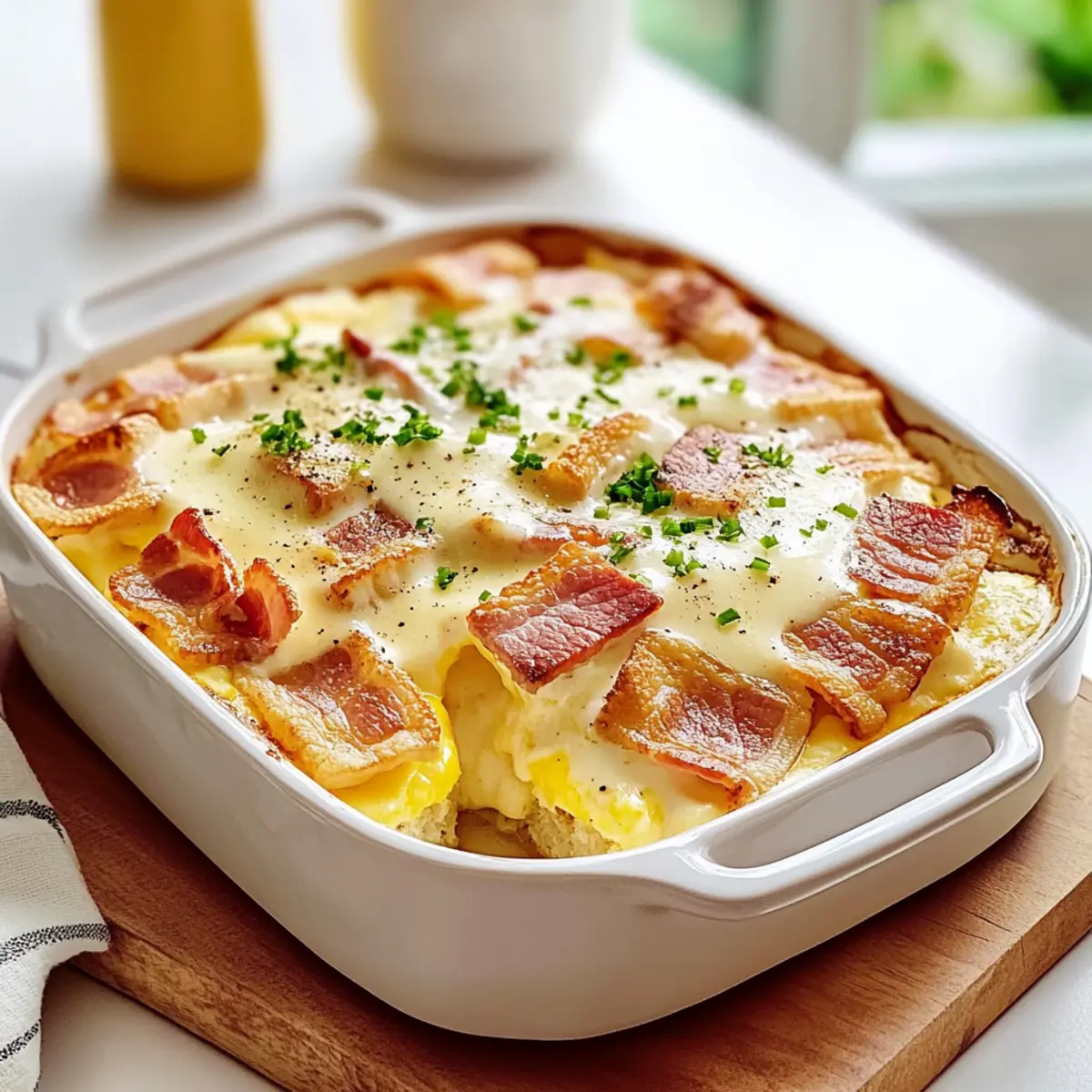
Eggs Benedict Casserole: A Cozy Twist on Classic Brunch
Ingredients
Equipment
Method
- Preheat your oven to 350°F (175°C). Grease a 9x13-inch baking dish.
- Slice the English muffins in half and toast them lightly. Arrange half in the baking dish, cut side up.
- Evenly distribute the Canadian bacon over the muffin layer.
- Whisk together the eggs, whole milk, salt, and pepper. Pour the mixture over the muffins and bacon.
- Drizzle hollandaise sauce over the egg-filled casserole.
- Bake for 30-40 minutes until the center is set and edges are golden.
- Let it rest for 10-15 minutes before slicing.
- Slice into squares and serve warm, garnished with fresh herbs.
Leave a Reply