
The aroma of sizzling chicken fills the air as I prepare to make Korean Chicken Bao, a delightful fusion that has quickly become a household favorite. With its soft, fluffy buns wrapped around juicy, marinated chicken and crunchy pickled vegetables, this recipe is not only an impressive crowd-pleaser but also a comforting meal ready in just 45 minutes. It’s the perfect dish for those cozy nights at home or when you want to entertain guests with a touch of Asian flair that’s surprisingly simple to create. Trust me, once you take that first bite, you’ll understand why these bao have a special place in my heart. Ready to elevate your weeknight dinners? Let’s dive into this culinary adventure!
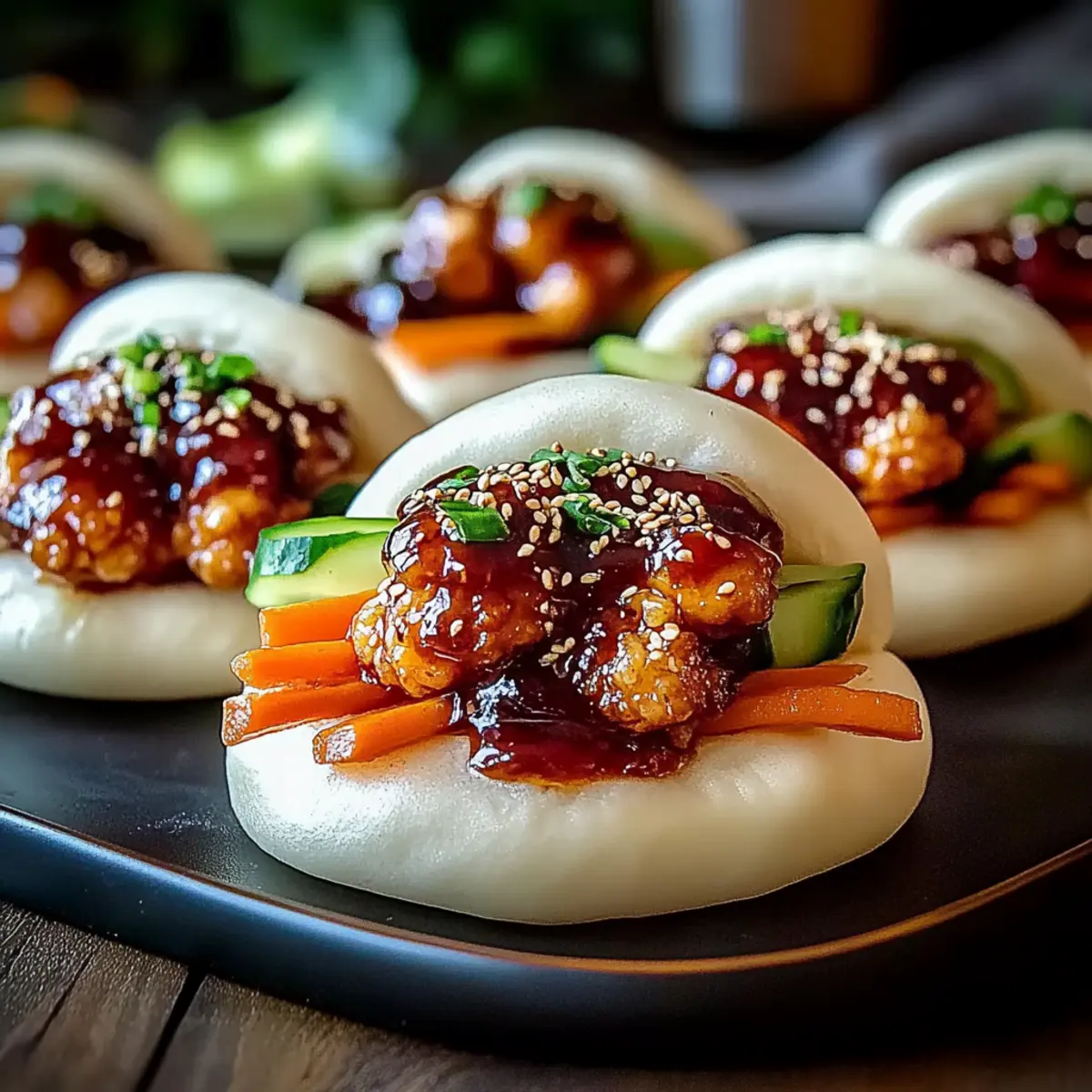
Why is Korean Chicken Bao a Must-Try?
Flavors Unite: The harmony of sweet, savory, and spicy in this dish creates an unforgettable taste sensation that will impress even the pickiest eaters.
Quick and Easy: Whipping up these bao in just 45 minutes makes it the perfect weeknight meal or last-minute dinner party showstopper.
Comforting Experience: With their soft, fluffy texture and succulent filling, these bao are synonymous with comfort food—ideal for cozy nights in.
Customizable Goodness: Feel free to switch up your fillings or toppings; whether you prefer spicy gochujang or a burst of fresh veggies, the possibilities are endless!
Crowd-Pleasing Delight: Perfect for sharing, they’ll undoubtedly become a go-to favorite for your family and friends. Serve alongside Garlic Parmesan Chicken or a light side like sesame cucumber salad for a well-rounded meal!
Korean Chicken Bao Ingredients
• The ingredients are simple yet impactful, ensuring your Korean Chicken Bao is a comforting delight!
For the Chicken Marinade
- Boneless, Skinless Chicken Thighs – Provides juicy protein; substitute with chicken breast for a leaner option.
- Garlic – Adds depth of flavor; fresh minced garlic is preferred for best results.
- Fresh Ginger – Contributes warmth and spice; can replace with ground ginger if fresh is unavailable.
- Low-Sodium Soy Sauce – Offers umami; can substitute with tamari for a gluten-free option.
- Honey – Provides sweetness and helps in caramelization; maple syrup can be used for a vegan version.
For Cooking and Assembly
- Vegetable Oil – For cooking chicken; any neutral oil can be used.
- Pickled Vegetables (Carrots & Cucumbers) – Adds crunch and acidity; store-bought or homemade can be used.
- Bao Buns – Soft, fluffy buns for wrapping; store-bought is convenient, while homemade is a rewarding alternative.
- Optional Toppings (Sesame Seeds & Green Onions) – Enhance flavor and presentation; sprinkle for that extra touch!
Step‑by‑Step Instructions for Korean Chicken Bao
Step 1: Make the Marinade
In a medium bowl, whisk together ¼ cup low-sodium soy sauce, 2 tablespoons honey, 4 minced garlic cloves, and 1 tablespoon of freshly grated ginger until smooth. This marinade will impart a rich flavor to your chicken. Set aside for later use and enjoy the fragrant aroma that fills the air as the ingredients blend together beautifully.
Step 2: Marinate the Chicken
Cut 1 pound of boneless, skinless chicken thighs into bite-sized pieces. Toss the chicken in the marinade, ensuring each piece is well coated. Cover the bowl with plastic wrap and refrigerate for at least 30 minutes, allowing the flavors to penetrate the meat. For even better results, marinate for up to 2 hours if time allows.
Step 3: Cook the Chicken
Heat 2 tablespoons of vegetable oil in a large skillet over medium-high heat. Add the marinated chicken to the hot skillet, making sure not to overcrowd the pan. Sauté the chicken for 6-8 minutes, stirring occasionally, until golden brown and fully cooked through (the internal temperature should reach 165°F). The chicken should look caramelized and fragrant as it cooks.
Step 4: Warm the Pickled Veggies
While the chicken cooks, take 1 cup of pickled carrots and cucumbers and gently heat them in a separate pan over low heat for 1-2 minutes. This quick warming will enhance their flavors without compromising their crunchy texture, making them the perfect topping for your Korean Chicken Bao.
Step 5: Steam the Bao Buns
Prepare the bao buns according to the package instructions, usually by steaming them for about 5-8 minutes. Use a steamer basket or a plate on top of a pot of simmering water. The buns are ready when they’re fluffy and warmed through. Keep them covered to maintain their softness while you finish preparing the rest of your meal.
Step 6: Assemble the Bao
Open each fluffy bao bun and fill them generously with the cooked chicken. Top with the warmed pickled vegetables, allowing the crunch and tanginess to balance the savory chicken beneath. For an extra burst of flavor, drizzle some leftover marinade over the top before closing the buns gently.
Step 7: Garnish and Serve
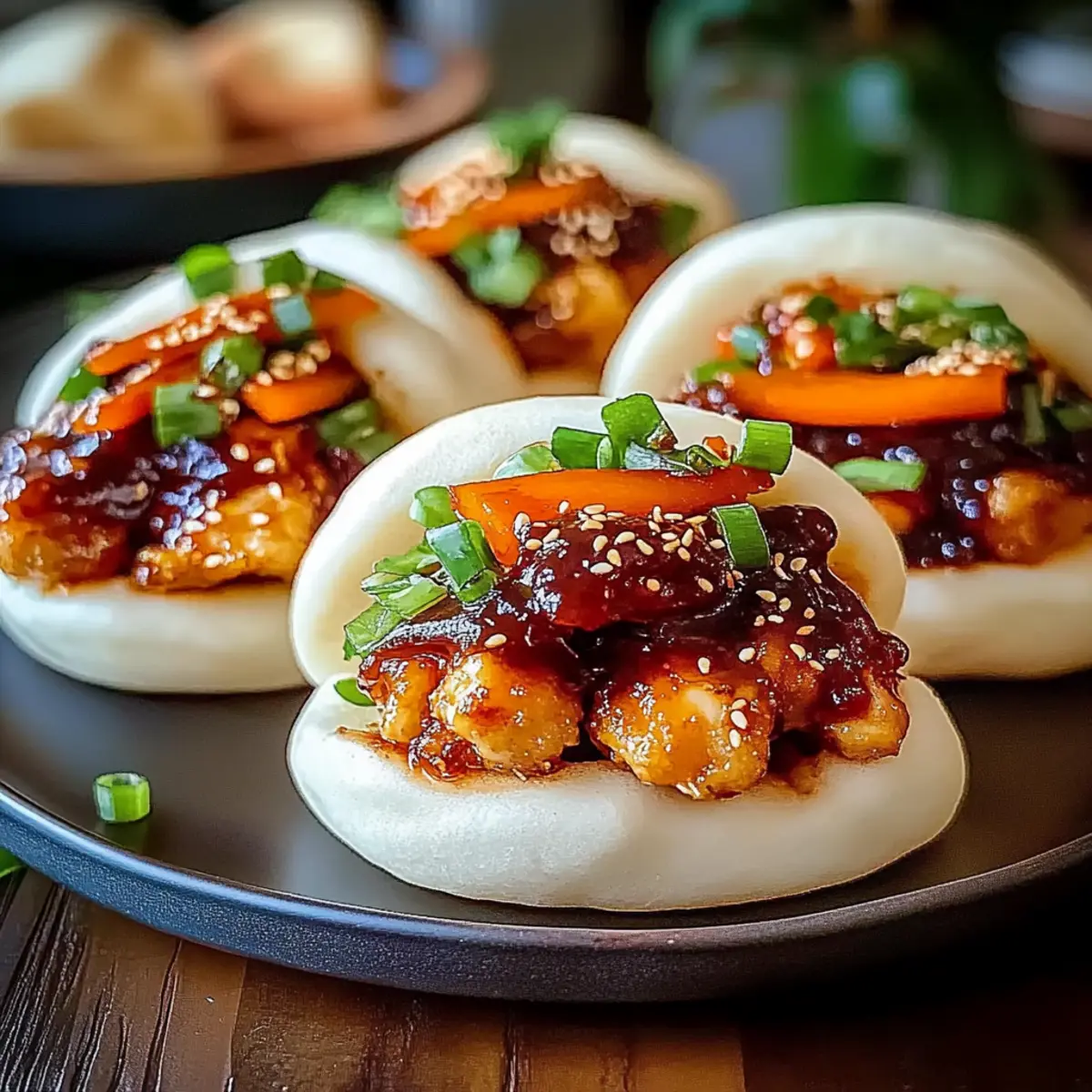
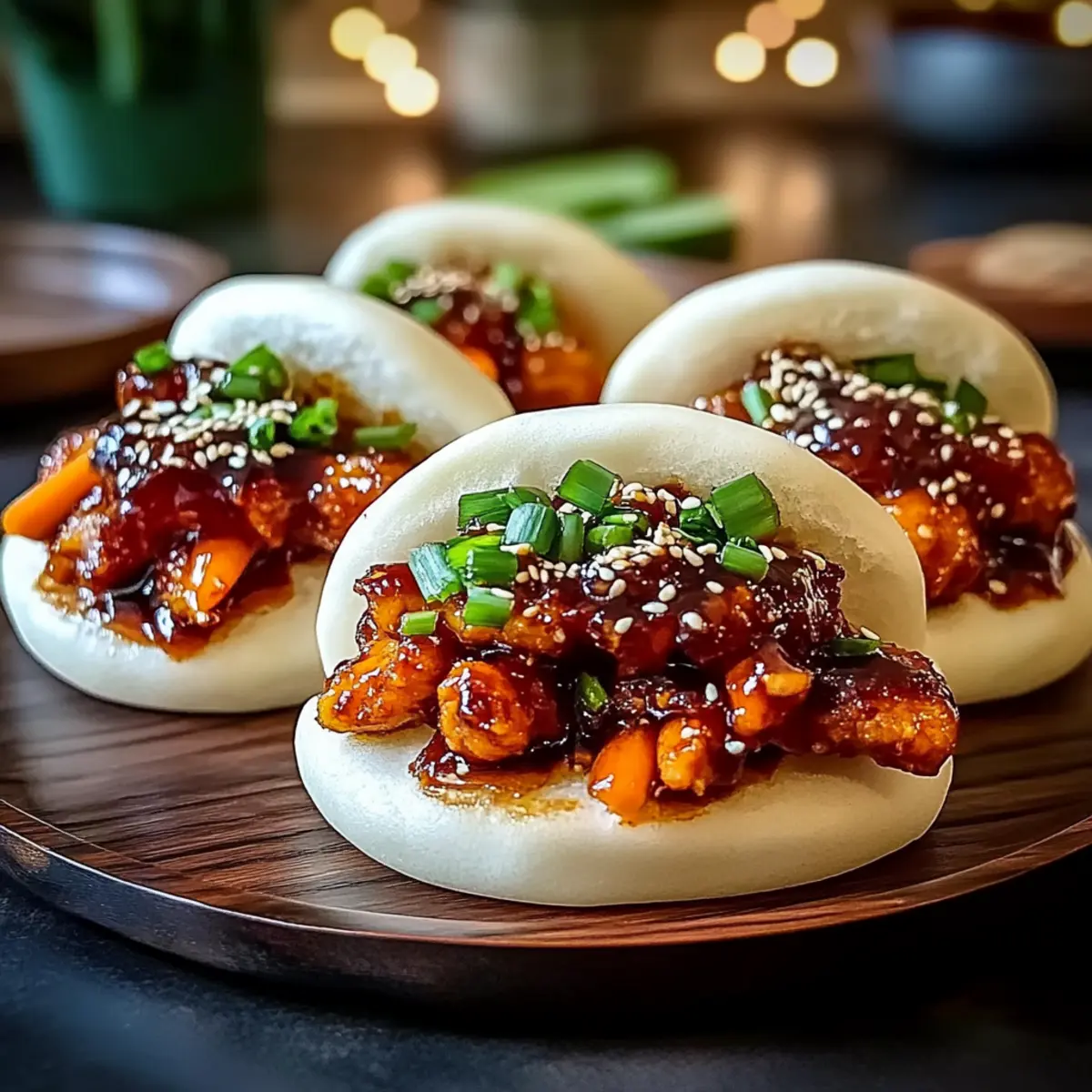
To elevate your Korean Chicken Bao, sprinkle sesame seeds and sliced green onions on top just before serving. This finishing touch not only enhances the visual appeal but adds delightful texture and flavor. Gather around the table and share these deliciously comforting treats with family and friends!
Storage Tips for Korean Chicken Bao
- Fridge: Store leftover cooked chicken and pickled vegetables in airtight containers for up to 3 days. Keep bao buns separate to maintain their fluffy texture.
- Freezer: Cooked chicken and pickled veggies can be frozen together for up to 2 months. Ensure they’re in a sealed bag or container to prevent freezer burn.
- Reheating: For best results, reheat the chicken and vegetables by gently warming them in a skillet. Bao buns can be steamed again for a few minutes to restore softness.
- Meal Prep: Marinate the chicken up to 2 hours in advance, and prepare pickled veggies ahead of time to speed up assembly when you’re ready to enjoy these Korean Chicken Bao.
Make Ahead Options
Korean Chicken Bao is a fantastic choice for meal prep! You can marinate the chicken up to 24 hours in advance, allowing the flavors to deepen while you manage your busy week. Additionally, you can cook the chicken and prepare pickled vegetables ahead of time, storing them in separate airtight containers in the fridge for up to 3 days to maintain their texture and quality. When you’re ready to enjoy your bao, simply steam the buns according to package instructions, reheat the chicken and veggies briefly, assemble, and garnish. This time-saving method ensures you have a delicious meal ready with minimal effort!
What to Serve with Korean Chicken Bao
Dive into a culinary journey with delicious accompaniments that turn your meal into an exquisite feast.
-
Sesame Cucumber Salad: The cool crunch of fresh cucumbers tossed in sesame dressing complements the savory bao perfectly, adding a refreshing twist.
-
Miso Soup: This warm, umami-packed soup provides a comforting contrast to the bao’s rich flavors, creating a well-rounded dining experience that warms the soul.
-
Kimchi: The tangy, spicy kick from kimchi offers a vibrant flavor burst, enhancing the bao’s sweetness while honoring Korean cuisine traditions.
-
Steamed Edamame: Lightly salted and tossed with a sprinkle of sea salt, these fluff beans are a delightful snack that adds a lightness to your meal.
-
Chili Garlic Noodles: These flavorful noodles bring a delightful heat and a delightful chewiness that contrasts the fluffy buns, making every bite interesting.
-
Jasmine Iced Tea: A chilled drink with floral notes balances the hearty flavors of the bao, making sip-worthy refreshment with every bite.
-
Yuzu Lemonade: Bright and zesty, this invigorating beverage cleanses the palate, ensuring that the succulent taste of your bao remains the star of the meal.
-
Mango Sticky Rice: For dessert, the creamy coconut and sweet mango create a luscious ending that resonates beautifully with the spicy and savory notes of the bao.
Expert Tips for Korean Chicken Bao
- Marinating Matters: Don’t skip the marinating step; it’s essential for infusing deep flavors into the chicken. Aim for at least 30 minutes or more for best results.
- Spice It Up: If you enjoy heat, add gochujang or sriracha to your marinade for a spicy kick that complements the sweetness.
- Bao Bun Care: Store leftover chicken and pickled veggies separately from the bao buns to keep them fluffy. Reheat buns gently by steaming to restore their softness.
- Warm Pickled Veggies: Gently warming pickled vegetables enhances their sweetness and brings out their flavors without making them soggy.
- Experiment with Fillings: Feel free to swap the chicken with a different protein or use assorted vegetables for a unique twist on your Korean Chicken Bao!
Korean Chicken Bao Variations & Substitutions
Ready to put a personal spin on your Korean Chicken Bao? The possibilities are endless, so let your creativity guide you!
-
Lighter Protein: Swap chicken thighs for chicken breast for a leaner dish that’s still juicy.
-
Vegan Option: Replace chicken with marinated tofu or jackfruit, offering a plant-based alternative bursting with flavor.
-
Sauce Variations: Experiment with different sauces! Try gochujang for spice or a sesame-ginger dressing for another layer of depth.
-
Seasonal Vegetables: Add seasonal pickled veggies like radishes or daikon for a unique crunch and vibrant color. The fresh crunch is delightful!
-
Spicy Kick: Toss in some sliced jalapeños or add sriracha to the marinade for an extra kick of heat.
-
Homemade Bao Buns: For a special treat, make your own bao buns from scratch—it’s easier than you might think and elevates the experience!
-
Flavor Boosts: Marinate the chicken overnight for deeper flavor infusion, making your chicken even more succulent. Trust me; your taste buds will thank you!
-
Herbed Touch: Fresh herbs like cilantro or mint can brighten the dish and add an exciting twist to your fill of flavors.
For more delicious chicken recipes, don’t miss checking out Cajun Chicken Alfredo or try your hand at Honey BBQ Chicken for variety!
Korean Chicken Bao Recipe FAQs
How do I select the best chicken for my Korean Chicken Bao?
Absolutely! For the juiciest and most flavorful results, I recommend using boneless, skinless chicken thighs. They provide excellent moisture and tenderness. If you prefer a leaner option, skinless chicken breasts work well too but may not yield the same juiciness. Look for pieces that are bright pink without any dark spots and fresh to the smell.
What is the best way to store leftover Korean Chicken Bao?
Very! To keep your leftovers fresh, store the cooked chicken and pickled vegetables in separate airtight containers in the refrigerator for up to 3 days. This ensures the bao buns retain their fluffy texture. If you choose to store them together, the buns may become soggy due to the moisture. For an even longer shelf life, you can freeze the cooked chicken and veggies for up to 2 months in a sealed freezer-safe bag.
Can I freeze the bao buns? If so, how?
For sure! Freezing bao buns is easy and keeps them fresh for later use. Once they’ve cooled completely, wrap each bun tightly in plastic wrap, then place them in a freezer-safe bag or container. They can be frozen for up to 3 months. When you’re ready to enjoy them, steam them again for about 5-7 minutes from frozen until they’re warm and fluffy!
What should I do if my bao buns are tough and not fluffy?
Oh no! If your bao buns turn out tough, this could be a result of overcooking or not allowing enough steam. Make sure you’re steaming them at a consistent temperature, and avoid overcrowding in the steamer to prevent uneven cooking. Additionally, a gentle warmth ensures the dough can rise properly. If you need to adjust your technique, reduce the cooking time slightly and keep them covered with a damp cloth after steaming to maintain moisture.
Are Korean Chicken Bao suitable for my allergies, such as gluten or nuts?
Absolutely! To make your Korean Chicken Bao gluten-free, swap low-sodium soy sauce for tamari, which is gluten-free. Most of the other ingredients are safe, but be sure to check your pickled vegetable labels for any hidden allergens. If anyone in your household has nut allergies, there are no nuts in this recipe; however, remember to verify your oil and any specific marinating ingredients are nut-free.
How can I make Korean Chicken Bao vegetarian or vegan-friendly?
Great question! To create a vegetarian or vegan version of Korean Chicken Bao, you can replace the chicken with marinated tofu or tempeh. Use a marinade of soy sauce, garlic, and ginger, just like you would for chicken. For the honey, substitute with maple syrup or agave syrup for a vegan-friendly sweetener. The result will be a delightful take on these bao, packed with flavor and texture!
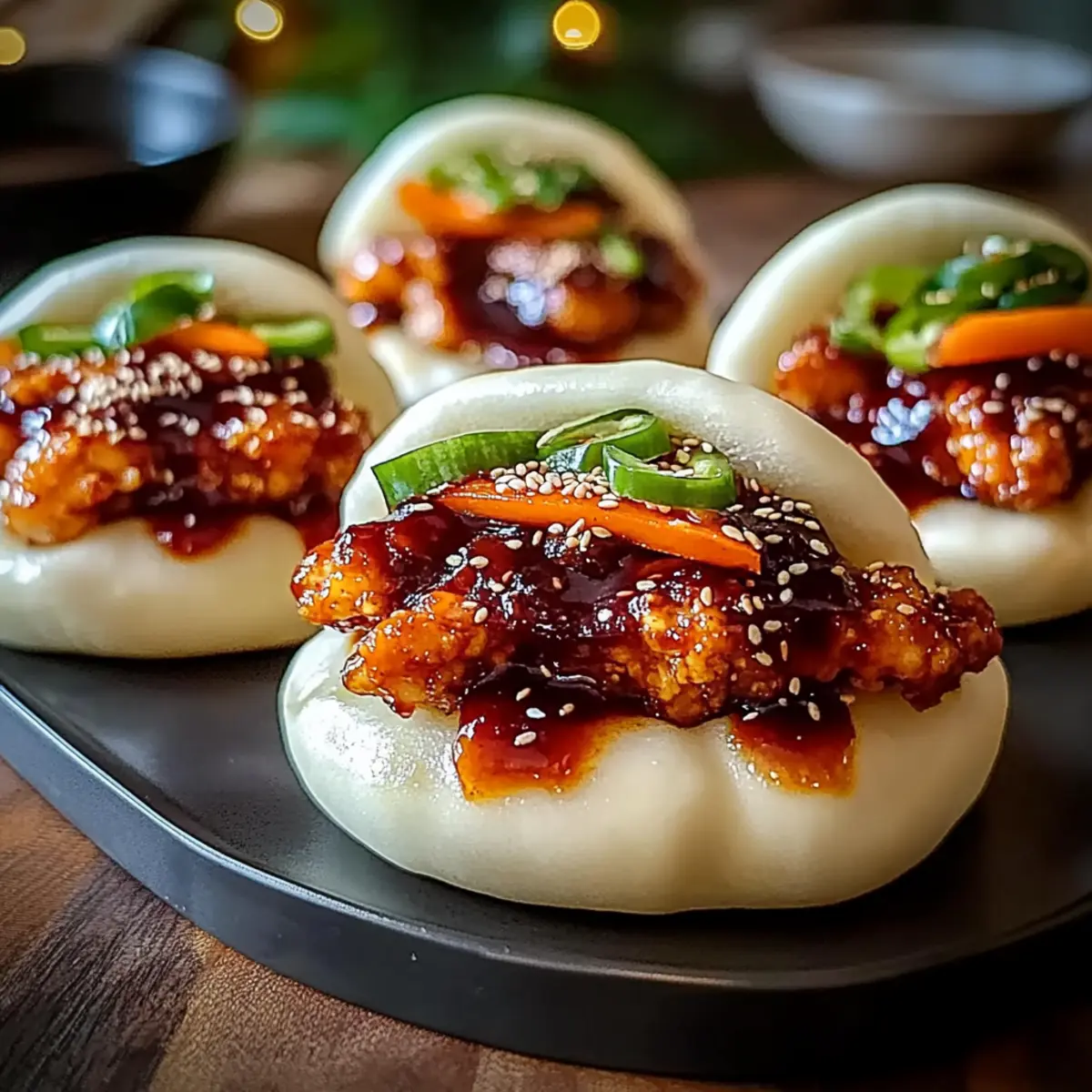
Savory Korean Chicken Bao: A Fluffy Flavor Adventure
Ingredients
Equipment
Method
- In a medium bowl, whisk together ¼ cup low-sodium soy sauce, 2 tablespoons honey, 4 minced garlic cloves, and 1 tablespoon of freshly grated ginger until smooth.
- Cut 1 pound of boneless, skinless chicken thighs into bite-sized pieces. Toss the chicken in the marinade and refrigerate for at least 30 minutes.
- Heat 2 tablespoons of vegetable oil in a skillet over medium-high heat. Add the marinated chicken and sauté for 6-8 minutes until golden brown and fully cooked.
- While the chicken cooks, gently heat 1 cup of pickled carrots and cucumbers in a separate pan over low heat for 1-2 minutes.
- Prepare the bao buns according to the package instructions, usually by steaming for about 5-8 minutes.
- Open each bao bun and fill them generously with the cooked chicken. Top with the warmed pickled vegetables.
- Sprinkle sesame seeds and sliced green onions on top just before serving.
Leave a Reply