
As the aroma of ginger and garlic wafts through my kitchen, I can’t help but feel a sense of comfort begin to settle in. There’s something truly magical about a steaming bowl of Korean Beef Noodles. This recipe combines tender, slow-cooked beef with chewy noodles, transforming simple ingredients into a fulfilling dish that’s perfect for any occasion. Beyond its delightful flavors, this comfort food masterpiece is a lifesaver on busy weeknights—easy to prepare and full of heart. Plus, you can customize it for everyone at the table, whether you’re looking for a gluten-free option or a cozy low-carb alternative. Ready to embrace the warmth and satisfaction this dish brings?
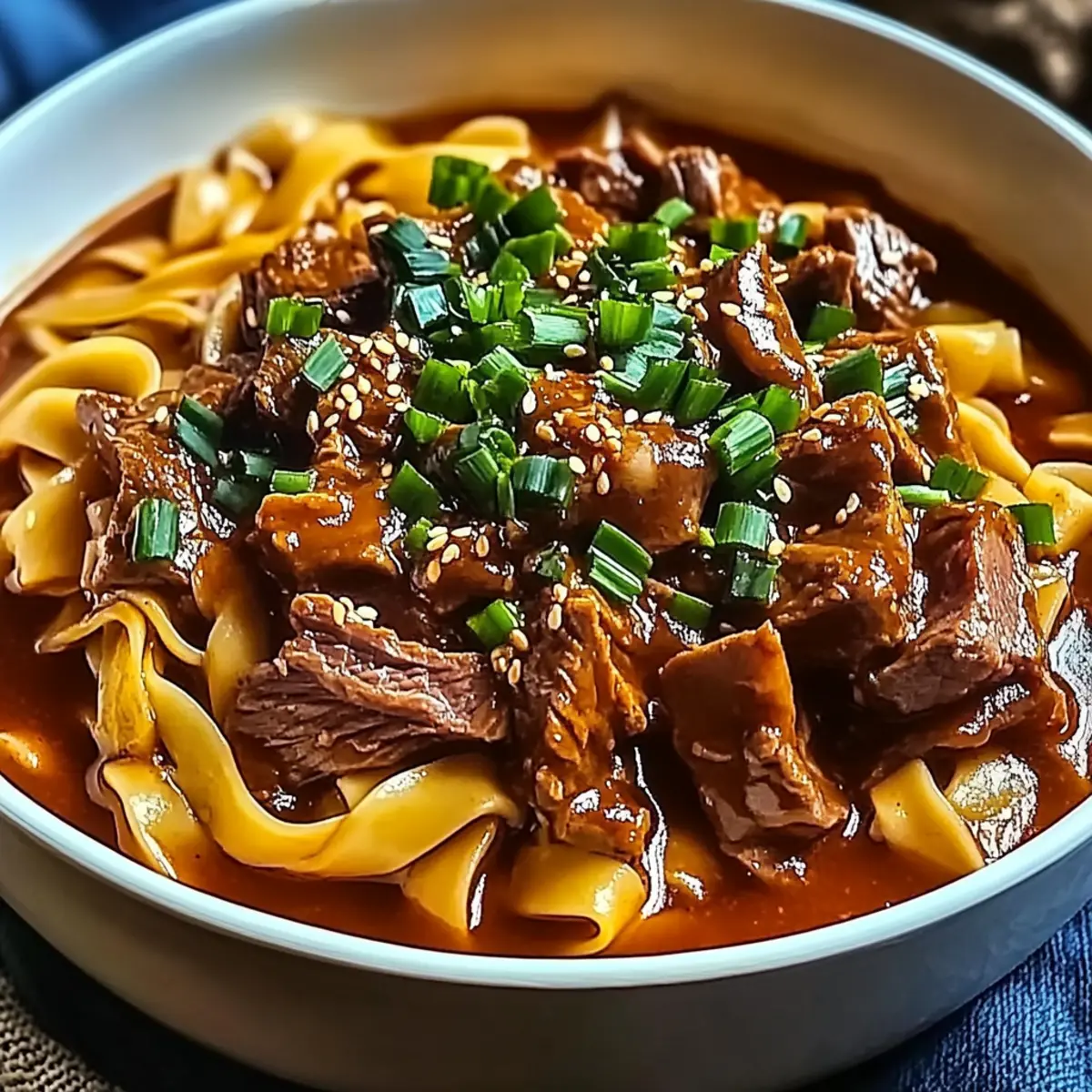
Why Are You Gonna Love These Noodles?
Comforting: Korean Beef Noodles deliver a warm, hearty embrace with each bite, perfect for cozying up on chilly nights.
Rich Flavor: The deep umami taste from the soy sauce, paired with a hint of sweetness from brown sugar, creates a flavor explosion that will tantalize your taste buds.
Customizable: Whether you’re gluten-free or low-carb, this dish adapts beautifully—swap in zucchini noodles or gluten-free pasta without sacrificing taste!
Quick & Easy: With just a few simple steps, you can have a restaurant-quality meal ready in no time. Ideal for busy nights or leisurely weekends.
Crowd-Pleasing: This dish is sure to impress friends and family, making it a perfect centerpiece for gatherings. Don’t forget to serve it with a side of kimchi for an authentic Korean experience!
Korean Beef Noodles Ingredients
• Discover what makes this dish a favorite!
For the Beef
- Beef Chuck – Provides the main protein source; becomes incredibly tender when slow-cooked. Consider using brisket for a richer flavor.
- Beef Broth – Adds depth and umami to the dish; chicken broth can be a lighter alternative.
- Water – Dilutes the broth for the perfect consistency; adjust for desired soupiness.
For the Sauce
- Soy Sauce – Infuses saltiness and umami; tamari is a great gluten-free option.
- Brown Sugar – Balances salty flavors and adds sweetness; honey or maple syrup can also work well.
- Ginger – Adds warmth and zest; fresh ginger is best, but ground ginger is a suitable substitute.
- Garlic – Enriches flavor; use fresh minced garlic for optimal taste or garlic powder in a pinch.
- Sesame Oil – Introduces nuttiness and richness; olive oil can be used, though it alters the flavor slightly.
- Black Pepper – Enhances overall flavor; freshly ground is ideal for best results.
- Gochujang (Korean Chili Paste) – Offers spice and depth; substitute with sriracha, adjusting to taste.
For the Noodles
- Noodles (Udon/Ramen) – The foundation of the dish; chewy texture pairs perfectly. Opt for gluten-free noodles if needed.
- Green Onions – Fresh garnish that adds flavor and visual appeal; fresh chives can be a delightful substitute.
- Sesame Seeds – Optional topping that contributes texture and nuttiness.
- Fresh Cilantro – Optional garnish for an extra burst of freshness; can be omitted if desired.
Step‑by‑Step Instructions for Korean Beef Noodles
Step 1: Prepare the Beef
Begin by cutting the beef chuck into 1-inch chunks and seasoning generously with freshly ground black pepper. This enhances the flavor and prepares your beef for the slow cooking process. Set it aside while you mix the flavorful sauce to ensure all ingredients meld beautifully later on.
Step 2: Mix the Sauce
In a medium bowl, whisk together the beef broth, soy sauce, brown sugar, minced ginger, minced garlic, sesame oil, and gochujang. Stir until the sugar fully dissolves and the ingredients are well combined. This sauce will add rich umami flavors to your Korean Beef Noodles, making each bite deliciously satisfying.
Step 3: Place in Slow Cooker
Transfer the seasoned beef chunks into your slow cooker, ensuring they are spread evenly. Pour the sauce mixture over the beef, making sure every piece is coated. This will allow the meat to absorb all the savory flavors while cooking, leading to tender, melt-in-your-mouth results.
Step 4: Cook
Cover the slow cooker and set it to low for 6-8 hours or high for 3-4 hours. You’ll know it’s ready when the beef is fork-tender and falls apart easily. This slow cooking method allows the flavors to deepen, ensuring you have a rich broth for your Korean Beef Noodles.
Step 5: Prepare Noodles
About 15-20 minutes before the beef is done, cook your noodles according to package instructions. If you’re using udon or ramen, bring water to a boil, add the noodles, and cook until al dente, usually around 3-5 minutes. Drain and set aside; this keeps them chewy and prevents them from getting mushy in the broth.
Step 6: Combine
Once the beef is tender and ready, stir in the cooked noodles gently into the slow cooker. This helps the noodles soak up some of the delicious broth while mixing with the tender beef, creating a harmonious blend of flavors in your Korean Beef Noodles. Adjust seasoning as desired.
Step 7: Serve
Ladle the comforting Korean Beef Noodles into bowls. Garnish generously with sliced green onions, a sprinkle of sesame seeds, and fresh cilantro, if using. This not only enhances the appearance but also adds delightful bursts of flavor, inviting everyone to dig in and enjoy this heartwarming dish.
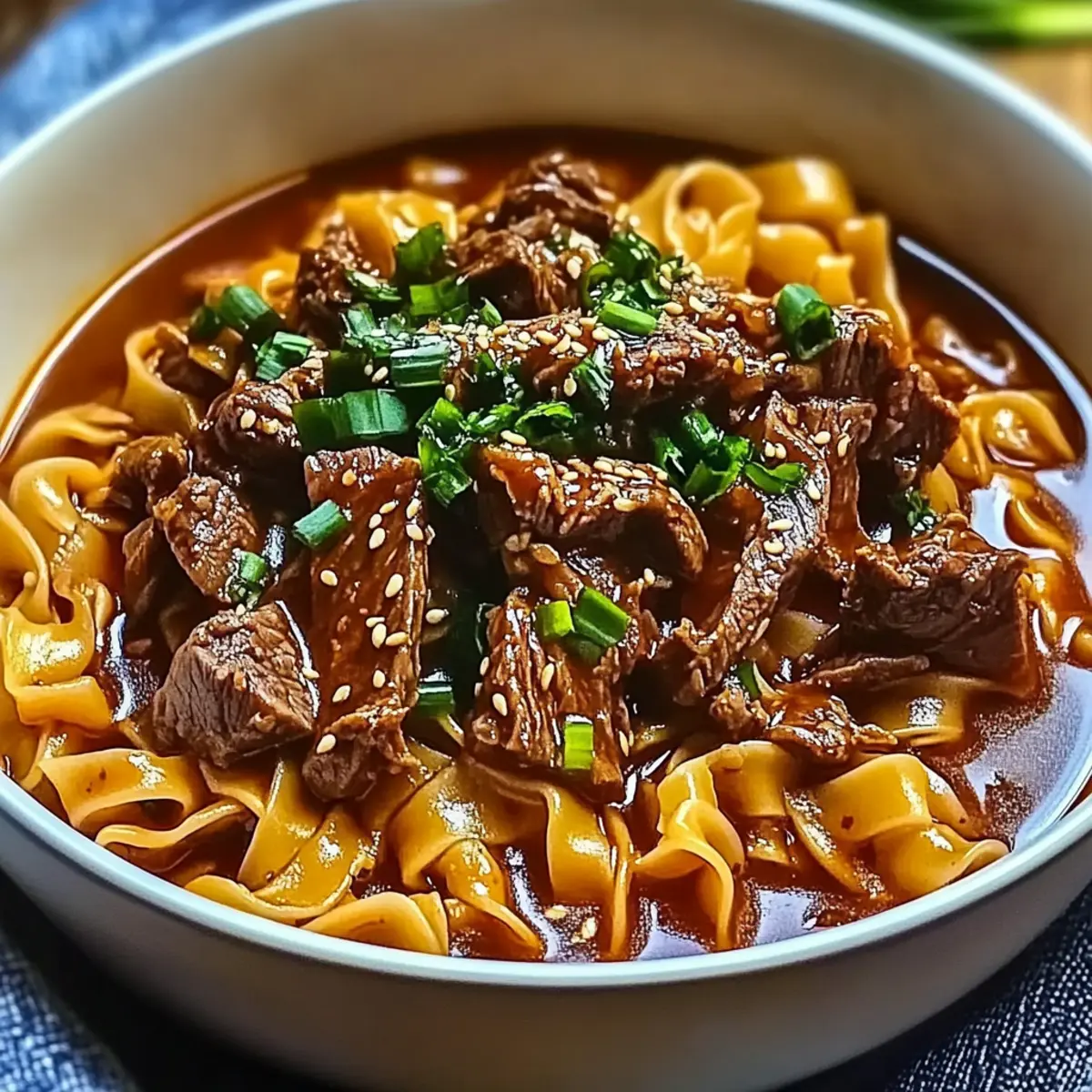
How to Store and Freeze Korean Beef Noodles
Fridge: Store leftover Korean Beef Noodles in an airtight container for up to 3 days. This keeps the flavors intact while ensuring safety.
Freezer: For longer storage, freeze the beef noodles in a freezer-safe container for up to 2 months. To prevent freezer burn, wrap it tightly in plastic wrap first.
Reheating: When ready to enjoy, thaw overnight in the fridge, then gently reheat on the stovetop, adding a splash of water or broth to retain moisture.
Room Temperature: It’s best to avoid keeping Korean Beef Noodles at room temperature for more than 2 hours to prevent spoilage; always refrigerate leftovers promptly.
Expert Tips for Korean Beef Noodles
• Slow Cook Magic: Allowing ample time for the beef to slow cook results in unmatched tenderness and flavor, making a big difference in your Korean Beef Noodles.
• Separate Noodle Cooking: Always cook the noodles separately to prevent them from becoming mushy in the broth. This maintains their lovely chewy texture!
• Taste as You Go: Adjust the gochujang based on your spice tolerance. Start with a little and add more as needed to achieve the perfect heat for your palate.
• Substitutions Matter: Make sure to consider suitable substitutions, like using tamari for gluten-free soy sauce or zucchini noodles for a low-carb option, without compromising flavor.
• Don’t Skip Garnishes: Garnishes like green onions and sesame seeds not only enhance visual appeal but also boost flavor and texture in your Korean Beef Noodles.
Make Ahead Options
These Korean Beef Noodles are perfect for meal prep enthusiasts looking to save time on busy weeknights! You can prepare the beef and sauce up to 24 hours in advance by cutting the beef and mixing the sauce ingredients, storing them in separate airtight containers in the refrigerator. This allows the flavors to meld beautifully while keeping the beef fresh. Additionally, you can also cook the noodles ahead of time and refrigerate them for up to 3 days; just toss them lightly with a drop of oil to prevent sticking. When you’re ready to serve, simply reheat the beef in the slow cooker until warmed through, combine with the noodles, and enjoy restaurant-quality Korean Beef Noodles with minimal effort!
What to Serve with Korean Beef Noodles?
A steaming bowl of Korean Beef Noodles creates a delightful dining experience that begs for complementary flavors and textures to round out the meal.
- Kimchi: This traditional Korean side dish adds a spicy, tangy kick that cuts through the richness of the beef, enhancing every bite.
- Crispy Spring Rolls: Enjoy these crunchy appetizers filled with vegetables or shrimp for a satisfying textural contrast to the soft noodles.
- Sesame Green Bean Salad: Fresh green beans tossed in sesame oil bring a vibrant crunch and bright flavor that balance the hearty noodles.
- Spicy Cucumber Salad: Cool and refreshing, this salad’s tangy soy dressing complements the warmth of the Korean Beef Noodles beautifully, adding zest to each bite.
- Steamed Rice: A classic pairing, fluffy rice soaks up the flavorful broth, making each mouthful even more comforting and satisfying.
- Chilled Soju: This popular Korean spirit is light and smooth, enhancing the meal experience and cleansing the palate between bites.
- Mocha Brownies: End the meal on a sweet note with these fudgy treats, their rich chocolate flavor offering a decadent contrast to the savory beef.
- Fruit Sorbet: A light and refreshing dessert, sorbet cleanses the palate and provides a sweet finish that feels indulgent without being heavy.
- Sparkling Water with Lime: For a non-alcoholic drink, this zesty, fizzy beverage refreshes and complements the meal’s flavors remarkably well.
- Jasmine Tea: Warm, aromatic tea adds serenity to the dining experience, soothing the palate after the savory noodles.
Korean Beef Noodles: Customization Ideas
Feel free to make these comfort noodles your very own with a few simple twists that will tantalize your taste buds!
-
Gluten-Free: Use gluten-free noodles for a delicious alternative that everyone can enjoy without sacrificing flavor. You’ll still get all that comforting goodness!
-
Low-Carb: Swap traditional udon or ramen with zucchini noodles or spiralized veggies. This not only cuts down on carbs but adds a fun twist to your presentation!
-
Vegetable Boost: Toss in vibrant vegetables like bok choy, bell peppers, or snap peas for added nutrition and crunch. They’ll harmonize beautifully with the tender beef.
-
Spicy Kick: If you enjoy a bit of heat, amp up the spice with extra gochujang or a sprinkle of red pepper flakes. It’ll add a delightful warm glow to the dish!
-
Protein Swap: Looking for a vegetarian option? Substitute beef with tofu or tempeh, and use vegetable broth for a satisfying plant-based meal.
-
Herb Variations: Instead of cilantro, try fresh basil or mint for an aromatic twist that brings a different flair to your Korean Beef Noodles.
-
Broth Surprise: Experiment with coconut milk in the broth for a creamy richness that elevates the overall dish, giving it a delightful tropical touch.
-
Easy Meal Prep: Double up on your ingredients and freeze a batch for busy weeknights! Your future self will thank you for having a delicious homemade meal ready to go.
These variations not only enhance your Korean Beef Noodles but also make this dish versatile enough for everyone at your table. Pair it with a side of kimchi or a fresh salad for a complete and satisfying meal.
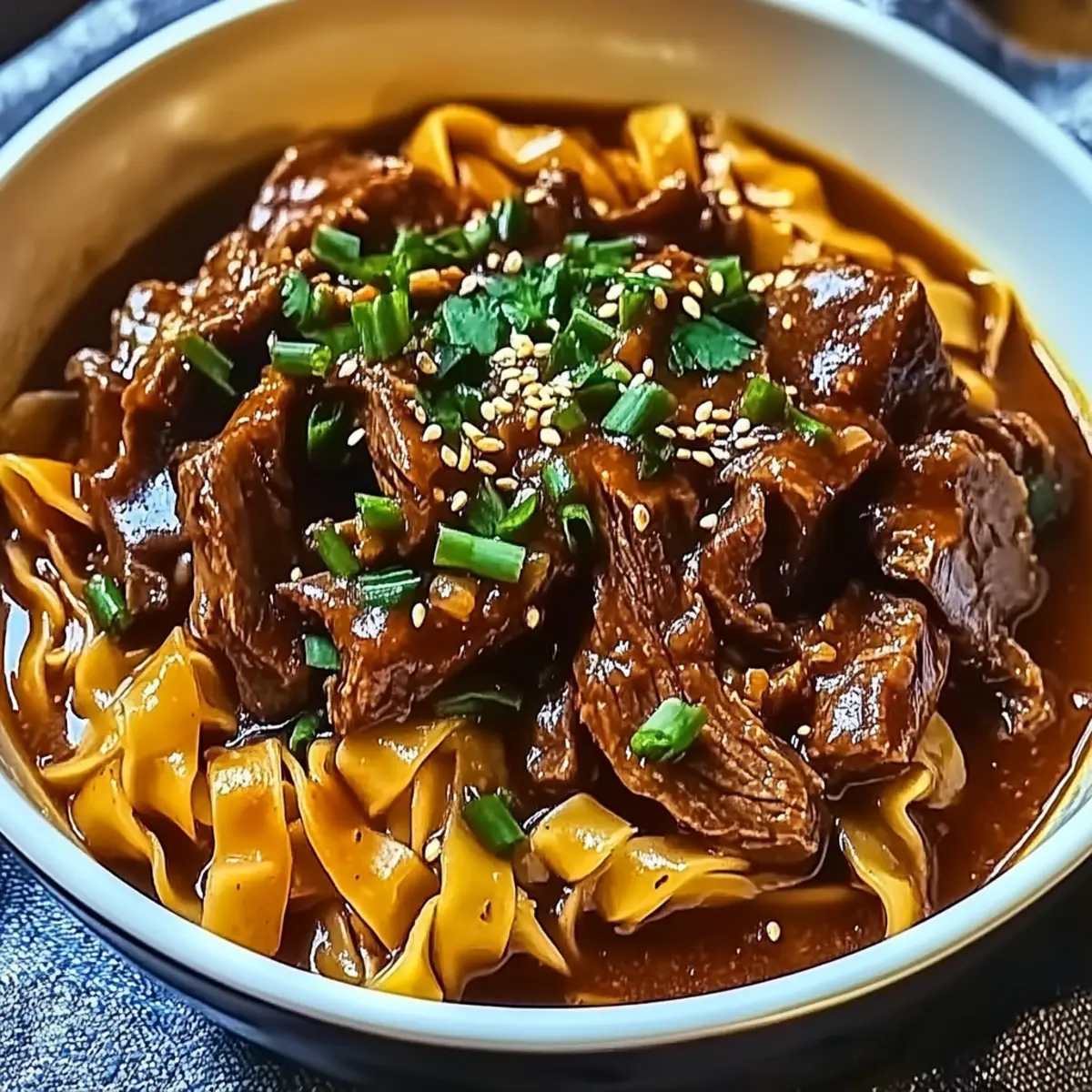
Korean Beef Noodles Recipe FAQs
How do I choose the right beef for Korean Beef Noodles?
When selecting beef, look for chuck roast as it becomes incredibly tender when slow-cooked, or try brisket for richer flavor. Choose cuts with some marbling, as they enhance the dish’s moisture and taste. Ensure the meat doesn’t have excessive dark spots or discoloration, indicating freshness.
How should I store leftovers of Korean Beef Noodles?
Absolutely! Store any leftover Korean Beef Noodles in an airtight container in the refrigerator for up to 3 days. Reheat gently on the stovetop, adding a splash of water or broth to maintain moisture and ensure that every bite is just as flavorful as when it was first made.
Can I freeze Korean Beef Noodles?
Yes, you can freeze Korean Beef Noodles for up to 2 months! Make sure to place them in a freezer-safe container and wrap it tightly in plastic wrap to prevent freezer burn. When you’re ready to enjoy, thaw them in the refrigerator overnight, then reheat on the stovetop with a little added water or broth to keep everything moist and delicious.
What if my beef turns out tough?
If your beef isn’t tender after cooking, it may not have been cooked long enough; slow cooking is key! For extremely tough cuts, you can slice the beef thinly against the grain and simmer it longer in the broth, allowing the flavors to meld while breaking down the connective tissues, and consequently yielding a more tender result.
Can I modify this recipe for dietary restrictions?
Very! For a gluten-free option, simply substitute regular soy sauce with tamari and use gluten-free noodles. If you’re looking for a low-carb alternative, zucchini noodles are a perfect substitute for traditional udon or ramen, allowing you to enjoy all the flavors of this dish without the carbs. Just remember to cook the noodles separately to preserve their texture.
What should I do if I don’t have gochujang?
If you find yourself without gochujang, don’t worry! Sriracha works as a great substitute, though you’ll want to adjust the amount to suit your heat preference. Start with a small amount and taste as you go, adding more until you achieve the desired spice level that complements the rich flavors of your Korean Beef Noodles.
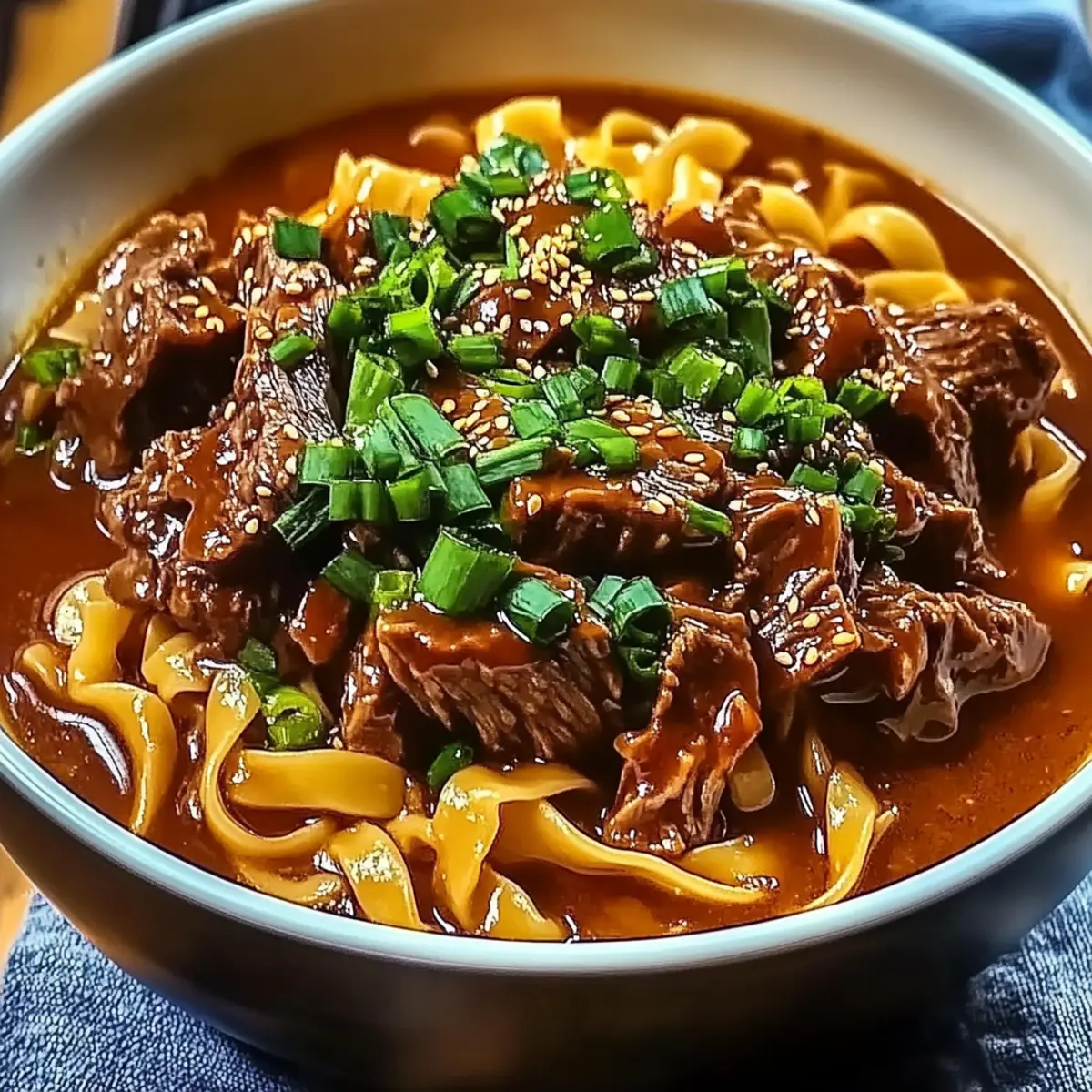
Korean Beef Noodles: Comfort in Every Savory Slurp
Ingredients
Equipment
Method
- Prepare the Beef: Cut beef chuck into 1-inch chunks, season with black pepper, and set aside.
- Mix the Sauce: Whisk together beef broth, soy sauce, brown sugar, ginger, garlic, sesame oil, and gochujang in a bowl until combined.
- Place in Slow Cooker: Transfer seasoned beef to slow cooker, pour sauce mixture over, coating all pieces.
- Cook: Cover and cook on low for 6-8 hours or high for 3-4 hours until beef is fork-tender.
- Prepare Noodles: About 15-20 minutes before beef is done, cook noodles according to package instructions.
- Combine: Stir in cooked noodles gently into the slow cooker with the beef.
- Serve: Ladle into bowls and garnish with green onions, sesame seeds, and cilantro if using.
Leave a Reply