
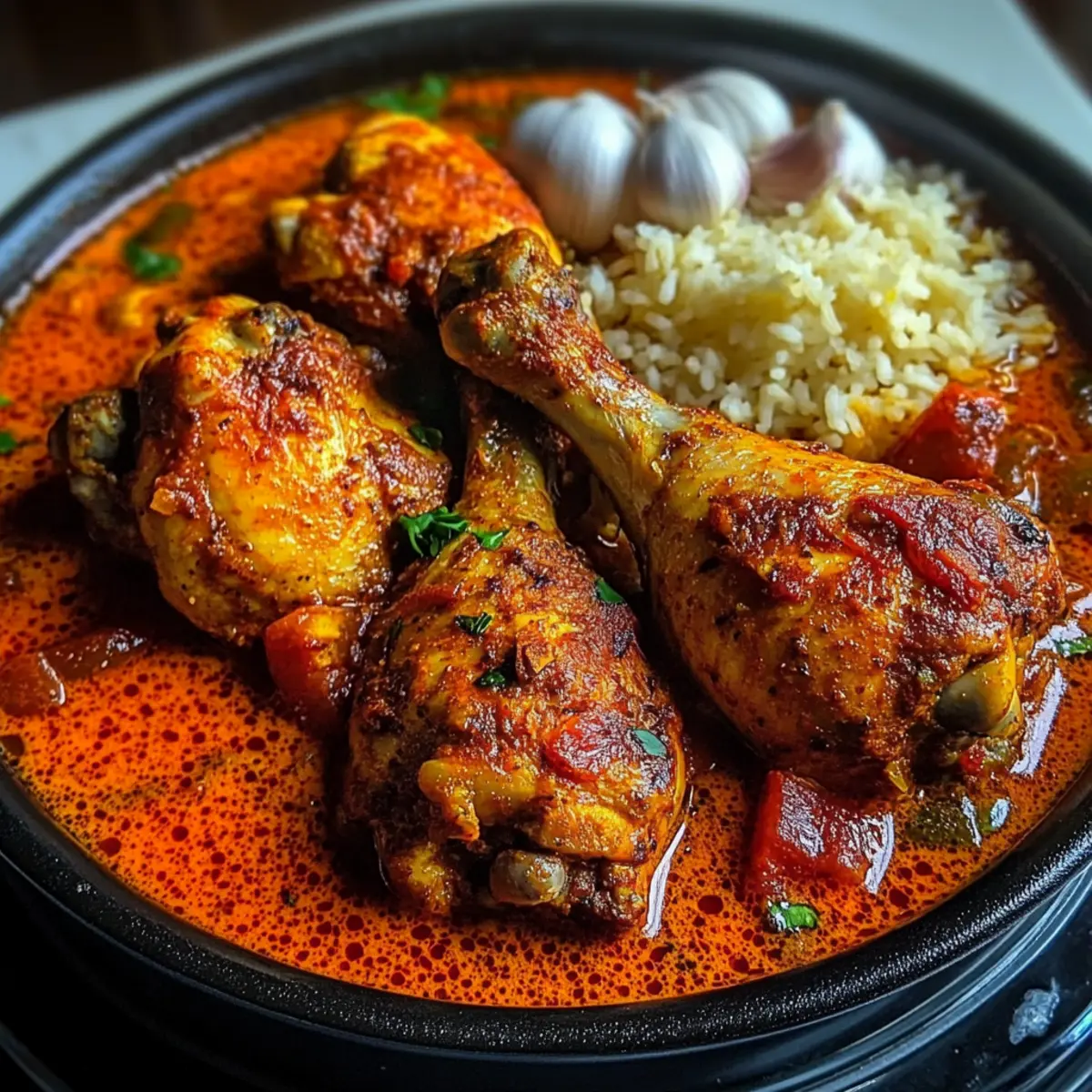
As I rummaged through my spice cabinet, a seemingly ordinary moment suddenly sparked a culinary adventure, landing me on the path to making an unforgettable Nigerian Chicken Stew recipe. This heartwarming dish, brimming with bold flavors and aromatic spices, captures the essence of West African comfort food. What makes this stew even more appealing is its quick prep time and ability to bring family and friends together around the dinner table. Picture tender chicken coated in a vibrant tomato and pepper sauce, simmering away and filling your home with irresistible scents. Whether served over fluffy rice, with crispy fried plantains, or alongside hearty yams, this stew is sure to be a crowd-pleaser. Curious to discover how to create this flavorful experience at home? Let’s dive into the world of Nigerian cooking!

Why is Nigerian Chicken Stew Irresistible?
Hearty but Simple: The beauty of this Nigerian Chicken Stew lies in its straightforward process, making it perfect for both experienced chefs and home cooks.
Bold Flavors: With a delightful mix of spices like curry powder, paprika, and scotch bonnet, each bite is infused with rich, comforting flavors that awaken the senses.
Versatile Pairing: Serve it with fluffy white rice, crispy fried plantains, or hearty yams for a complete meal.
Family-Friendly: This dish appeals to all ages, making it an excellent choice for gatherings or family dinners.
Make Ahead Option: You can prepare it in advance, making weeknight meals a breeze without sacrificing flavor!
Once you try this stew, you might find yourself inspired to explore other delightful dishes, like Buffalo Chicken Dip or Gordon Ramsay’s Chicken Cordon Bleu, expanding your culinary repertoire!
Nigerian Chicken Stew Ingredients
• Get ready to cook up a hearty dish!
For the Stew
• Chicken – Bone-in works best for flavor but boneless cooks faster.
• Salt – Essential for enhancing chicken and sauce flavors.
• Black Pepper – Adds a gentle depth and heat to the dish.
• Paprika – Brings beautiful color and mild sweetness.
• Curry Powder – Infuses the stew with warm, earthy Nigerian flavors.
• Thyme – Contributes a lovely herbal aroma to the mix.
• Onion – The aromatic base; chopped onion delivers the best flavor.
• Vegetable Oil – Used for searing the chicken and sautéing aromatics.
For the Sauce
• Roma Tomatoes – Fresh tomatoes create a sweet, rich sauce; canned works too if fresh aren’t handy.
• Red Bell Pepper – Adds sweetness and should be blended for a smooth texture.
• Small Red Onion – Milder taste for blending, enhancing the sauce flavor.
• Scotch Bonnet Pepper – Packs heat; swap with habanero or omit for milder results.
• Tomato Paste – Deepens flavor and thickens the sauce for a perfect consistency.
• Garlic Powder – Convenient for adding aromatic depth; fresh garlic can be used as well.
• Ginger Powder – Offers warmth and a hint of spice in every bite.
• Bouillon Cube – Boosts umami flavor, but can be skipped for a lighter variation.
• Fresh Parsley or Cilantro – Garnish that adds a pop of freshness.
• Lime or Scallions – Optional to brighten flavors and enhance presentation.
Dive into your cooking adventure with this Nigerian Chicken Stew recipe, and enjoy the comforting flavors of home!
Step‑by‑Step Instructions for Nigerian Chicken Stew Recipe
Step 1: Marinate the Chicken
Begin by placing your chicken pieces in a large bowl and generously sprinkle them with salt, black pepper, paprika, curry powder, thyme, and chopped onion. Make sure the chicken is well-coated with the spices as you mix everything together. Let it marinate for about 30 minutes at room temperature to enhance the flavors before cooking.
Step 2: Sear the Chicken
Heat 2-3 tablespoons of vegetable oil in a large skillet over medium-high heat. Once the oil is shimmering, carefully add the marinated chicken pieces, allowing them to brown on all sides for about 5-7 minutes. Look for a golden crust that develops on the chicken. After searing, remove the chicken from the skillet and set it aside on a plate.
Step 3: Blend the Sauce Ingredients
In a blender, combine the Roma tomatoes, red bell pepper, small red onion, and scotch bonnet pepper. Blend until you achieve a smooth puree. Set this vibrant mixture aside; it will form the heart of your delicious Nigerian Chicken Stew. This step incorporates all the essential flavors while ensuring the sauce is creamy and uniformly textured.
Step 4: Cook the Sauce Base
Return to the skillet you used for the chicken and add a little more oil if needed. Add the tomato paste and let it fry for about 2 minutes, stirring continuously. This process deepens the flavors. Now, pour in the blended tomato mixture and bring it to a gentle simmer. Cook this vibrant sauce for 10 minutes until it thickens and the oil begins to separate slightly.
Step 5: Season the Sauce
Once the sauce is bubbling and fragrant, stir in the garlic powder, ginger powder, bouillon cube, and additional salt as necessary. Mix everything thoroughly, letting the spices meld into the sauce for another 2-3 minutes. This will ensure that your Nigerian Chicken Stew has a robust and savory flavor profile that’s simply irresistible.
Step 6: Combine and Simmer
Return the seared chicken to the skillet, nestling it in the sauce. Reduce the heat to low, cover the skillet, and simmer gently for 25-30 minutes. Stir occasionally and baste the chicken with the sauce to allow the flavors to penetrate. The chicken will become tender, and the rich aroma will fill your kitchen, signaling it’s almost ready.
Step 7: Garnish and Serve
Once the chicken is cooked through and tender, remove the skillet from heat. Garnish with freshly chopped parsley or cilantro for a burst of color and freshness. If you like it extra spicy, feel free to add some sliced chilies. Now, your delicious Nigerian Chicken Stew is ready to be served alongside fluffy rice or fried plantains for a comforting meal.

Nigerian Chicken Stew Recipe Variations
Customize your Nigerian Chicken Stew with these delightful twists that add new flavors and experiences to this comforting classic.
- Protein Swap: Use beef or fish instead of chicken for a different protein punch. Each option brings its unique texture and taste to the stew.
- Spicy Alternative: Opt for jalapeño or a mild chili to replace the scotch bonnet for a flavorful kick without overwhelming heat, catering to milder palates.
- Veggie Boost: Toss in some carrots or peas for added nutrition and vibrant color. This not only enhances the visual appeal but also brings in fresh flavors.
- Healthy Base: Serve with quinoa or cauliflower rice instead of traditional rice for a low-carb, nutritious side that complements the stew’s richness.
- Coconut Creaminess: Stir in a splash of coconut milk for a creamy texture and a hint of sweetness—perfect for those cozy nights when you crave something extra special.
- Herbal Option: Use fresh basil instead of parsley or cilantro for a unique herby flavor that complements the stew in a new way.
- Smoky Flavor: Incorporate smoked paprika to amp up the smokiness and add depth to the stew’s flavor profile, taking it to a whole new level.
As you savor this delicious stew, you might also want to explore other favorites like Buffalo Chicken Dip or Gordon Ramsay’s Chicken Cordon Bleu to further enrich your culinary adventures!
What to Serve with Nigerian Chicken Stew?
Enjoying a comforting stew is made even better by pairing it with delightful sides that elevate your meal.
-
Fluffy White Rice: A classic companion, its texture absorbs the rich sauce beautifully, enhancing each bite and creating a filling experience.
-
Crispy Fried Plantains: Sweet and caramelized, they provide a delightful contrast to the savory stew while adding a touch of indulgence to your meal. Imagine the crunch melting into sweet warmth with each mouthful!
-
Boiled Yams: Their starchy flavor complements the vibrant spices of the stew perfectly, adding heartiness and creating a satisfying combination.
-
Quinoa Salad: A light and nutritious option, this fresh dish adds a wholesome crunch, making your meal well-rounded and lively.
-
Cornbread: A warm, buttery cornbread brings a cozy, sweet element that softens the boldness of the stew, enhancing the comforting vibe.
-
Cucumber Relish: A refreshing side of crisp cucumbers helps cleanse the palate, balancing the rich flavors and giving a zesty touch.
-
Mango Chutney: Sweet and tangy, this condiment will elevate your Nigerian Chicken Stew experience with layers of flavor that create a delicious contrast.
-
Chilled Palm Wine: As a traditional drink, its sweetness pairs remarkably well with the spiced stew, becoming a delightful beverage choice that encourages sharing and conversation.
-
Coconut Rice: Creamy and fragrant, coconut rice not only enhances the dish’s flavor but remains a tropical twist that transports you straight to West Africa.
With these delightful accompaniments, you’ll create a vibrant feast that celebrates the heart and soul of Nigerian cuisine.
Expert Tips for Nigerian Chicken Stew Recipe
• Marinate Well: Letting the chicken marinate long enough allows the spices to infuse deeply, enhancing flavor and tenderness.
• Perfect Sear: Achieve a golden crust by ensuring the oil is hot before adding chicken; this adds depth to the stew’s flavor.
• Adjust Spice: If you prefer milder heat, use less scotch bonnet pepper or substitute with a gentler pepper.
• Consistent Sauce: Blend all sauce ingredients thoroughly for a smooth texture; this ensures an even coating on the chicken.
• Monitor Cooking Time: Be cautious with boneless chicken as it cooks faster; check doneness to avoid dryness.
• Store Leftovers: For maximum flavor retention, store the leftovers in an airtight container, perfect for reheating.
How to Store and Freeze Nigerian Chicken Stew
Fridge: Store in an airtight container and refrigerate for up to 4 days. This keeps the flavors fresh and allows for a quick reheat during the week.
Freezer: For longer storage, freeze the stew for up to 3 months. Make sure to use a freezer-safe container or heavy-duty freezer bag to prevent freezer burn.
Reheating: When ready to enjoy, thaw overnight in the fridge and reheat gently on the stovetop, adding a splash of water if the sauce has thickened. This ensures your Nigerian Chicken Stew remains delicious and comforting!
Make-Ahead Tip: Consider preparing the stew in advance and freezing portions. This makes for easy weeknight dinners when you’re short on time.
Make Ahead Options
Nigerian Chicken Stew is perfect for meal prep, allowing you to savor its bold flavors while saving valuable time during busy weeknights. You can marinate the chicken up to 24 hours in advance, which enhances its taste and tenderness. Additionally, the sauce can be prepared entirely up to 3 days ahead; simply blend the ingredients and store them in an airtight container in the refrigerator to maintain freshness. When you’re ready to serve, sear the marinated chicken and simmer it in the prepped sauce for about 25-30 minutes. This ensures that every bite of your Nigerian Chicken Stew is just as delicious and comforting as if it were freshly made!
Nigerian Chicken Stew Recipe FAQs
How do I select the best chicken for my stew?
Absolutely! For the richest flavor, opt for bone-in chicken pieces. They bring a depth to the stew that boneless chicken can’t quite match. Look for chicken that’s plump and has a fresh, pink appearance. Avoid any that have dark spots or an off odor, as these can indicate spoilage. If you’re short on time, boneless chicken is a viable option and will cook faster!
How should I store leftover Nigerian Chicken Stew?
You can store your delightful stew in an airtight container in the refrigerator, where it will remain fresh for up to 4 days. Make sure it’s completely cooled down before sealing to maintain the best texture and flavor when reheated. Just give it a gentle stir while reheating to redistribute those beautiful flavors!
Can I freeze Nigerian Chicken Stew?
Absolutely! You can freeze this stew for up to 3 months. Just make sure to use a freezer-safe, airtight container or a heavy-duty freezer bag. Before freezing, let it cool completely; this prevents ice crystals from forming. When you’re ready to enjoy it, thaw it overnight in the fridge and reheat gently on the stovetop, adding a splash of water if necessary.
What if my stew is too thick after cooking?
If you find your Nigerian Chicken Stew is too thick, don’t worry! Simply stir in a bit of chicken broth or water to reach your desired consistency. Cook it on low heat for a few minutes, stirring continuously to allow the flavors to meld back together. This will not only loosen the stew but also keep it flavorful.
Are there any dietary considerations I should keep in mind?
Very! This recipe is Halal-friendly, so it can be enjoyed by many who follow specific dietary guidelines. However, if serving to guests, always check for potential allergies, especially regarding spices like scotch bonnet peppers or any garnish ingredients. You can easily modify the heat levels or omit certain elements to suit your guests’ needs.
What do I serve with Nigerian Chicken Stew?
Serve this comforting dish with fluffy white rice, which beautifully soaks up the savory sauce. Fried plantains or yams are also delightful accompaniments that enhance the meal’s heartiness. Get creative! Think about adding a crisp salad or steamed vegetables for a wholesome, balanced dinner that brings everyone together around the table.

Nigerian Chicken Stew Recipe: Comforting Flavor in Every Bite
Ingredients
Equipment
Method
- Marinate the chicken with salt, black pepper, paprika, curry powder, thyme, and chopped onion for 30 minutes.
- Heat vegetable oil in a skillet and sear chicken until golden brown (5-7 minutes), then set aside.
- Blend Roma tomatoes, red bell pepper, small red onion, and scotch bonnet pepper until smooth.
- Cook tomato paste in the skillet for 2 minutes, then add the blended mixture and simmer for 10 minutes.
- Stir in garlic powder, ginger powder, bouillon cube, and salt; cook for another 2-3 minutes.
- Return seared chicken to the skillet, cover, and simmer on low for 25-30 minutes, basting occasionally.
- Garnish with parsley or cilantro and serve with rice or fried plantains.
Leave a Reply